Handcrafted in South Africa

Where the Grain
Tells the Story

Ultra-premium end-grain cutting boards, individually handcrafted from the world's finest hardwoods. No two alike. Built to outlast generations.

View Collection Our Craft
Hand-crafted end-grain South African hardwoods Food-safe mineral oil finish Heirloom quality Custom sizing available Personalised engraving Hand-crafted end-grain South African hardwoods Food-safe mineral oil finish Heirloom quality Custom sizing available Personalised engraving

Every Board, a Masterpiece

Each piece begins as raw hardwood and ends as a functional work of art. End-grain construction protects your blades while developing a rich patina over time.

Signature
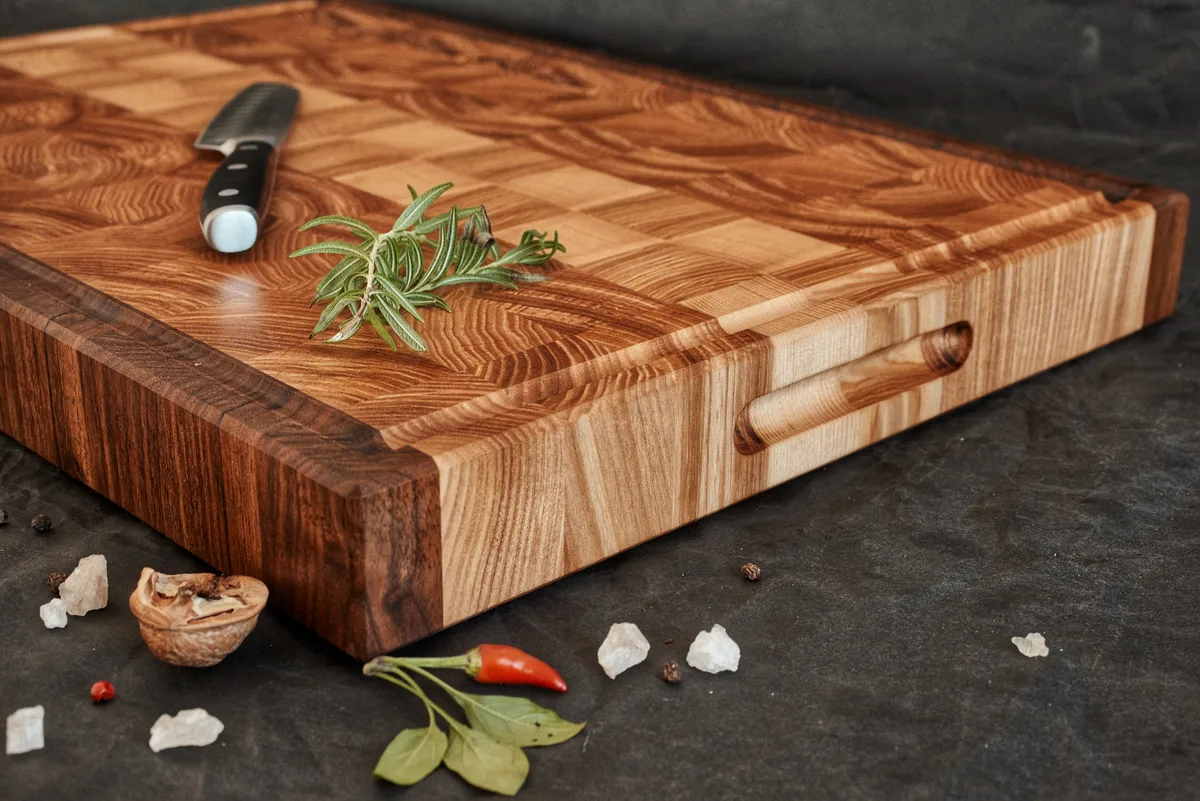
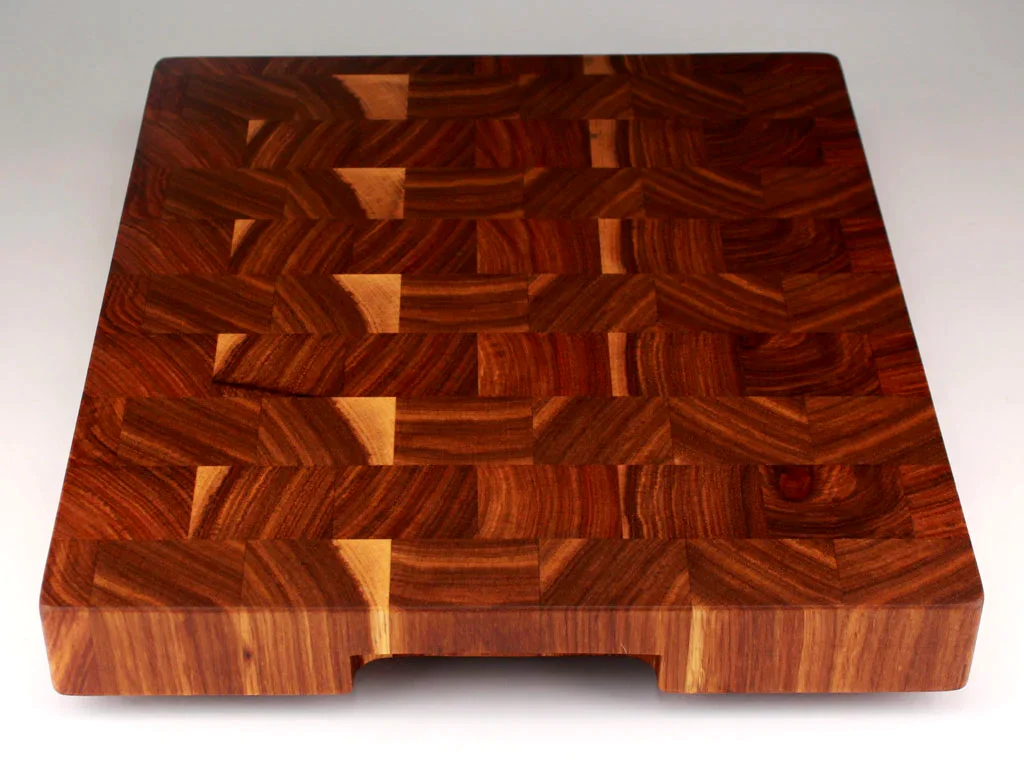
End-grain Kiaat cutting board showing chevron grain pattern

The Kiaat Classic

End-grain board in African Kiaat (Bloodwood). Warm amber tones with exceptional natural lustre. 38 × 28 × 6 cm.

Most Popular
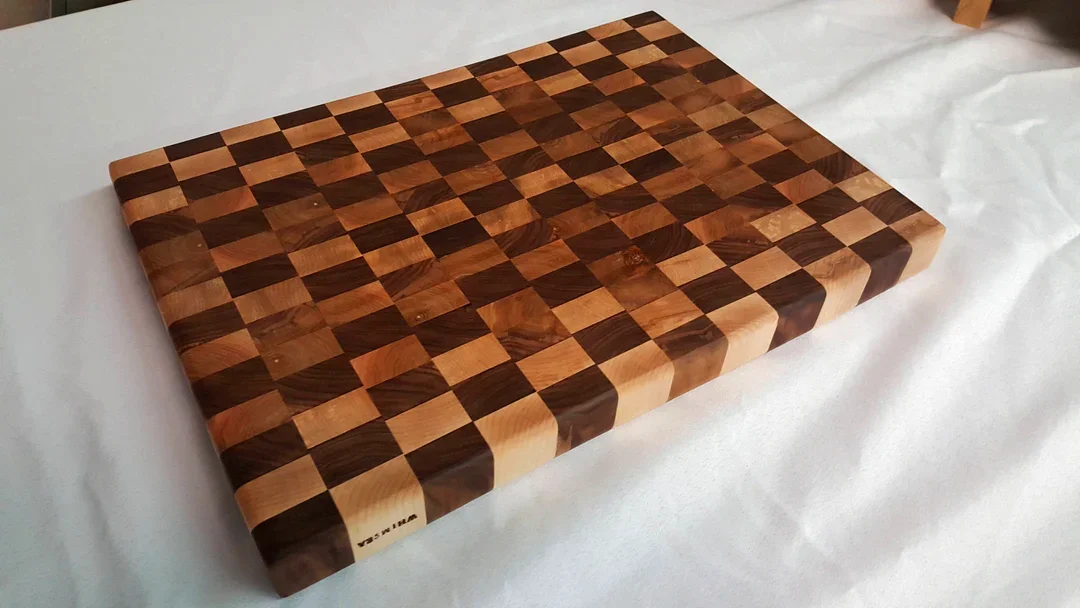
Walnut and maple checkerboard end-grain cutting board

The Walnut & Maple Checkerboard

A striking interplay of American Black Walnut and Hard Maple. The checkerboard pattern is as functional as it is beautiful. 40 × 30 × 6 cm.

Custom
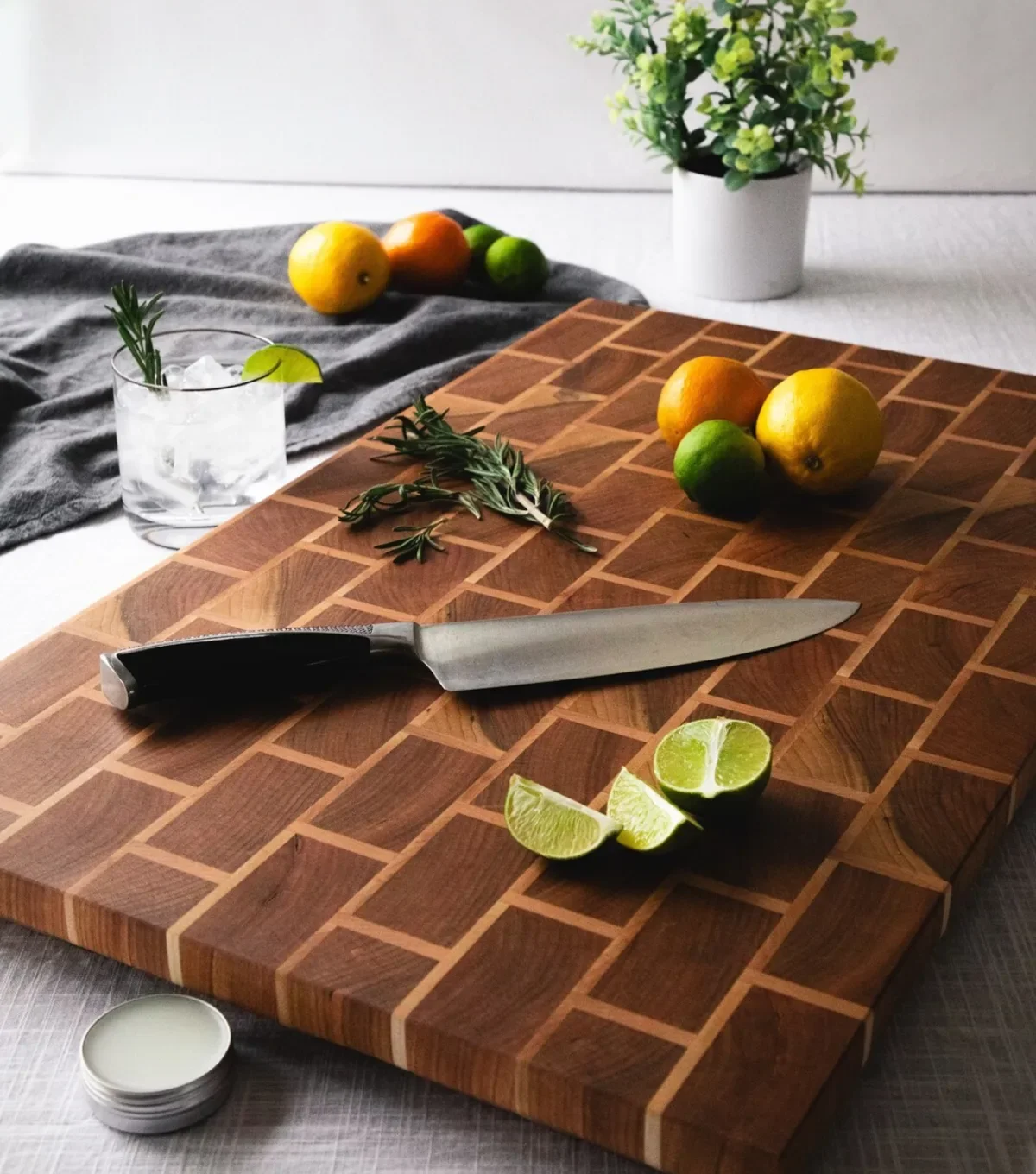
Large end-grain cutting board with brick pattern — Board Room XL

The Board Room XL

Our largest board — a statement piece for professional kitchens or serious home cooks. Mixed hardwood chevron pattern. 60 × 40 × 7 cm.

Gift
Wild olive and cherry end-grain cutting board

The Olive & Cherry Petite

Wild Olive paired with American Cherry — a natural for cherry kitchen cabinetry, where the board continues the wood story right onto the counter. Cherry deepens dramatically with age, from pale blonde to a rich reddish-amber. Compact and elegant; the gift that keeps improving. 28 × 22 × 5 cm.

New
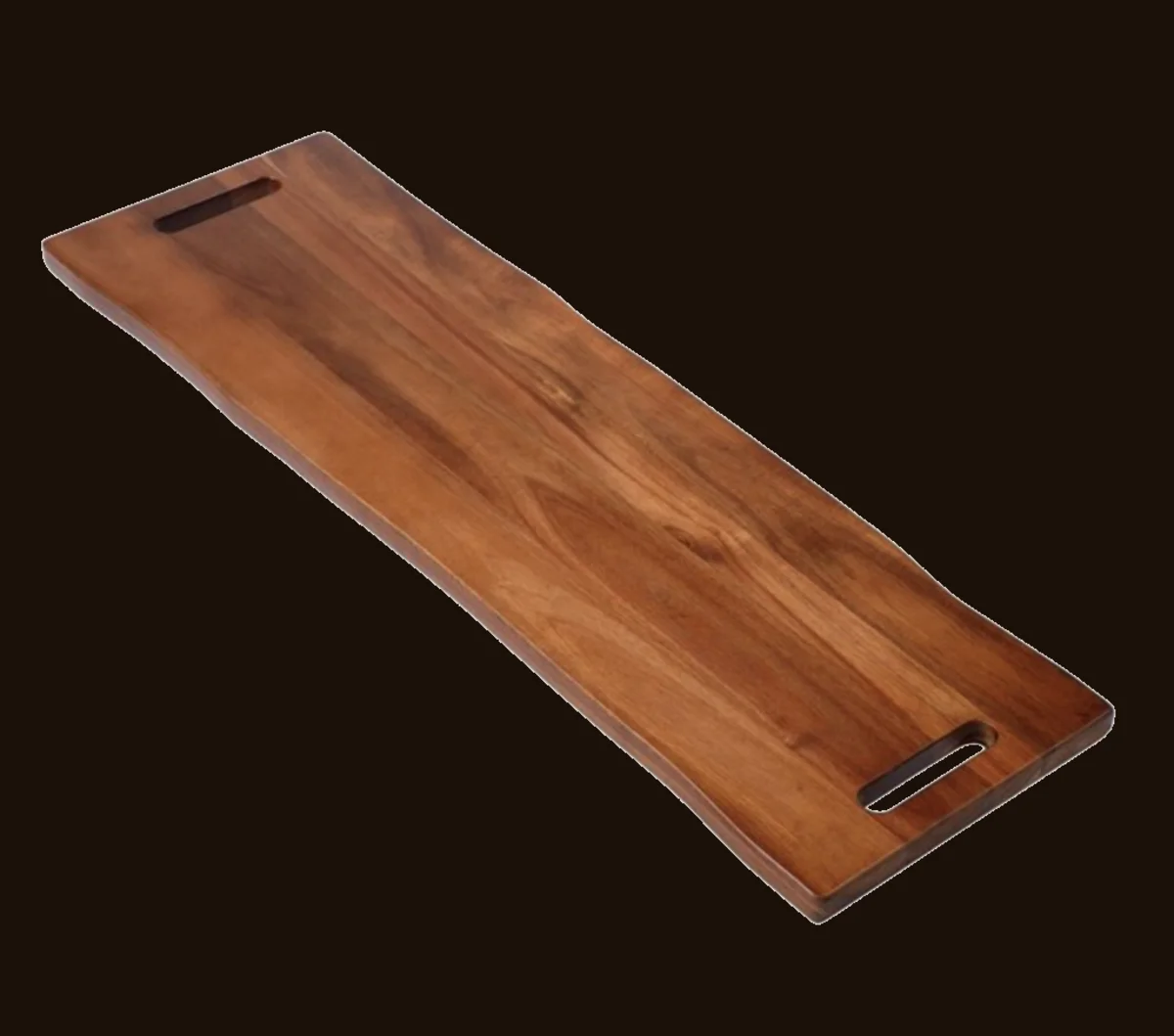
Long flat hardwood serving board with handles

The Charcuterie Board

Wide, flat face-grain Acacia serving board with integrated juice groove. Perfect for entertaining. Includes leather cord handle. 50 × 28 cm.

SHIPS WORLDWIDE
Kiaat African Teak end-grain cutting board handcrafted in South Africa for international export

African Hardwood — Export Edition

You cannot buy a Kiaat end-grain board in North America or Europe. These species — Kiaat (African Teak/Bloodwood), Wild Olive, Rhodesian Teak — do not exist in shops outside southern Africa. Handcrafted individually, signed, with a certificate of species origin. The only way to own one is to have it made here. Ships worldwide in export-grade packaging. 38 × 28 × 6 cm.

Range of handcrafted hardwood cutting boards showing different wood species

Bespoke Commission

Your vision, our craft. Custom dimensions, wood species, inlay patterns, and laser engraving. Wedding gifts, corporate awards, heirlooms.

Your Plastic Board is Poisoning Your Food

This is not a marketing claim. There are peer-reviewed papers. Read on.

⚠️
The Microplastics Problem

Every time you run a knife across a plastic cutting board, you are grinding microplastic particles directly into your food. A 2023 study published in Environmental Science & Technology estimated that a standard plastic polyethylene cutting board sheds between 14 and 71 million microplastic particles per year under normal kitchen use — and that is a conservative estimate. Polypropylene boards fare no better.

Microplastics have now been detected in human blood, lung tissue, breast milk, the placenta, the liver, the colon, and most recently the walls of human arteries. A 2024 study in The New England Journal of Medicine found that patients with microplastics and nanoplastics in their arterial plaque had a 4.5× higher risk of heart attack, stroke, or death over the following three years compared to those without.

The long-term health implications of chronic microplastic ingestion are not yet fully understood — which is precisely the problem. What the science does make clear is that voluntary, daily, direct-to-food exposure from a kitchen tool that can simply be replaced with wood is unnecessary. The plastic cutting board is not a neutral object. It is a source of contamination in the one place it should be the last.

What About Glass or Ceramic Boards?

Glass and ceramic boards solve the microplastics and bacteria problems — then introduce entirely different ones. Glass has a Mohs hardness of 5.5. High-carbon kitchen steel sits between 6 and 7. Every pass of a quality knife across a glass board accelerates edge wear at a rate that would horrify any chef. You are not cutting on glass. You are sharpening it, and blunting yourself in the process.

Glass also provides zero tactile feedback and zero give — two properties that make cutting physically harder and meaningfully less safe. The noise alone tells you something is wrong. Glass boards exist in the category of products that look good in a showroom and make no sense in a kitchen.

The Bacterial Research — Wood Wins

In the 1990s, food safety microbiologist Dr. Dean O. Cliver at UC Davis set out to prove scientifically what health authorities assumed to be true: that plastic cutting boards were safer than wood. His findings were the opposite of what he expected.

Cliver introduced bacteria to both plastic and wooden boards under controlled conditions. On plastic boards, bacteria survived and remained recoverable even after washing — particularly in knife grooves, where they were protected from soap and water. On wooden boards, bacteria were drawn into the wood's capillary structure within minutes and could not be recovered. They did not reproduce. They died. The effect was observed across multiple wood species.

Subsequent research found that this bactericidal effect is amplified in end-grain construction, where the open fibres create a more effective capillary draw. It is not cleaning the surface that protects you — it is the wood itself, doing what wood has done for the entire history of food preparation.

The FDA still officially recommends plastic. They updated this guidance in the early 2000s to acknowledge wood as acceptable after Cliver's work, but the default recommendation hasn't changed — not because the science supports it, but because institutional positions rarely reverse quickly. The science supports wood. Unambiguously.

No Microplastics

A hardwood board sheds nothing into your food. Not one particle. Wood is an inert natural material that has been in direct contact with human food for the entire duration of human civilisation without incident.

Naturally Antibacterial

The capillary structure of hardwood draws bacteria below the surface where they cannot reproduce and die off. This effect strengthens in end-grain construction and has been replicated across independent research groups.

Kind to Your Knives

End-grain fibres part around the blade rather than resist it. Your knives stay sharper, longer. A good knife on an end-grain board is a relationship. A good knife on glass is a tragedy.

Restorable & Permanent

A BARK board that develops surface wear can be sanded back and re-oiled to factory condition at any time. A scarred plastic board cannot. It stays scarred — harbouring bacteria and shedding microplastics into every meal, permanently.

Only the Finest Hardwoods

We source sustainably and carefully. Every species is chosen for its density, grain character, food safety, and beauty.

Kiaat
Southern Africa

Also known as African Teak or Bloodwood. Rich reddish-brown with interlocked grain. Exceptionally durable and naturally resistant to moisture.

American Black Walnut
North America

The gold standard of cabinet woods. Deep chocolate tones with a straight, sometimes figured grain. Ages magnificently.

Hard Maple
North America

Exceptionally hard and close-grained. Near-white with subtle amber tones. The classic choice for professional butcher blocks.

Wild Olive
South Africa

Strikingly figured with dramatic contrasting grain patterns. One of the hardest South African species. No two boards are alike.

American Cherry
North America

Warm pinkish-brown that deepens dramatically with age and light exposure — freshly milled Cherry is almost blonde; within a year of use it darkens to a rich, reddish-amber that is immediately recognisable. Fine, even grain with occasional gum pockets for character. Particularly sought after by customers with cherry kitchen cabinetry, where a matching Cherry end-grain board on the counter creates a cohesion that no other material can replicate. One of the most visually rewarding woods to watch age.

Stinkwood
South Africa

A protected and prized South African hardwood. Dark, lustrous, with interlocked grain. An heirloom wood for heirloom boards.

African Blackwood
East Africa

One of the densest woods in the world. Near-black with purple undertones. Extremely hard and naturally antibacterial.

Rhodesian Teak
Zimbabwe / Southern Africa

One of Africa's finest hardwoods — denser and more figured than common teak, with warm honey-brown tones and a tight, interlocked grain that resists splitting under the heaviest use. Exceptional dimensional stability in our climate. An authentic African alternative to imported teak at a fraction of the import cost.

White Oak
North America

The most sought-after cutting board wood in the world right now — and for good reason. White Oak's ray fleck pattern (those distinctive silver streaks) is unmistakable, and its tyloses — microscopic plugs that seal the wood's pores — make it naturally water-resistant in a way no other oak species achieves. The same wood used for bourbon barrels and fine wine cooperage. Pairs beautifully with Walnut for a classic contrast that photographs remarkably well.

Wenge
Central Africa

Near-black with fine golden streaks running through the grain — Wenge is one of the most visually dramatic hardwoods available. Extremely dense (it sinks in water), with a coarse, open grain that takes an oil finish beautifully and develops a rich dark patina over time. The contrast of Wenge against pale Maple in a checkerboard or stripe pattern is genuinely spectacular. Not for the timid.

African Mahogany
West & Central Africa

Rich reddish-brown with an interlocked ribbon grain that catches light in a way few other species can match. African Mahogany (Khaya) is moderately hard with excellent dimensional stability — it moves very little with humidity changes, making it particularly suitable for large boards where stability matters. A classic cabinetmaking wood brought to the cutting board with spectacular results.

European Walnut
Europe & Western Asia

Lighter and more figured than its American cousin — European Walnut (Juglans regia) offers a warmer, more golden-brown tone with extraordinary figure variation: crotch grain, burr, and feather patterns appear regularly and make each board genuinely one of a kind. Slightly softer than American Black Walnut but prized for its visual complexity. The walnut of choice for European furniture makers for centuries.

White Oak
North America & Europe

The superior oak for cutting boards. Unlike Red Oak, White Oak's pores are naturally sealed with tyloses — microscopic growths that block water and bacteria penetration. The same property that makes it the world's preferred whisky barrel wood makes it exceptional for food contact. Pale golden-tan with a straight, tight grain and impressive hardness.

Red Oak
North America

Visually striking with a warm pinkish-red tone and dramatic cathedral grain. Best used in decorative face-grain panels and accent strips within end-grain designs rather than as a primary cutting surface — its open pores make it more porous than White Oak. Paired with denser species it adds extraordinary visual drama to a board.

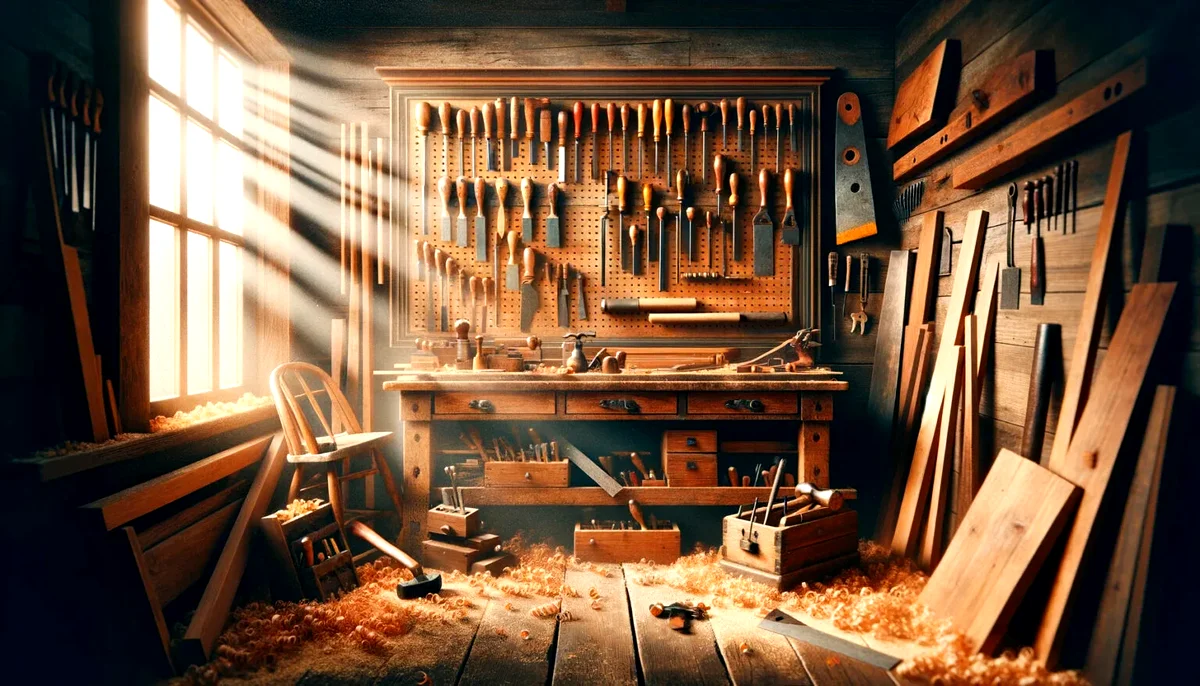
The workshop — hand tools on the wall, shavings on the floor

Made by Hand.
Made to Last.

"A cutting board is not a utensil. It is a relationship between the maker, the wood, and the cook who will use it every day for the next forty years."

Every BARK board begins as carefully selected rough lumber. We mill, joint, and plane each piece by hand before the glue-up — a precise process that determines the final grain pattern.

End-grain construction means the board presents the cross-section of the wood fibres to your blade. The fibres part and self-heal with each cut, preserving both your knives and the board for decades.

The Process

I
Select & Mill

Premium hardwood is hand-selected for grain, density, and colour. Rough lumber is milled to precise thickness and jointed perfectly flat.

II
Glue Up

Strips are arranged for the desired pattern, then glued, clamped and left to cure. The assembly is then re-milled and rotated 90° for end-grain exposure.

III
Shape & Sand

Boards are run through the drum sander, then hand-sanded through progressive grits from 80 to 400. Edges are chamfered and feet are fitted.

IV
Oil & Finish

Multiple coats of food-safe mineral oil are applied and absorbed over several days. A final beeswax finish seals and protects the surface.

Keep It Beautiful for Decades

End-grain boards are thirsty. The open fibres drink oil readily, and that oil is what keeps the wood supple, stable, and beautiful. Neglect it and the board dries, contracts, and eventually cracks. Maintain it and it becomes a family heirloom.

01
Oil — Monthly

Apply a generous coat of food-safe mineral oil with a cloth. Rub it in with the grain, leave it for an hour, wipe off the excess. For the first three months of ownership, do this weekly — a new board is especially porous and benefits from being thoroughly seasoned before heavy use.

Use only food-grade mineral oil. Never olive oil, coconut oil, or any cooking oil — these go rancid inside the wood within weeks and the smell is unpleasant and permanent. Mineral oil is inexpensive, completely tasteless, and lasts indefinitely in the bottle.

02
Wax — Every Two to Three Months

Apply a thin coat of beeswax-mineral oil finish over the oiled surface. Buff with a clean cloth. This seals the surface, repels moisture, and gives the board that characteristic deep lustre that makes a well-maintained hardwood board so visually satisfying.

Every BARK board ships with its first wax treatment already applied. We can supply additional wax finish on request — or you can make your own: melt one part beeswax into four parts mineral oil over low heat, cool, and apply. It keeps indefinitely at room temperature.

What to Avoid — Without Exception

  • The dishwasher. A single cycle generates enough heat and steam to split any wooden board along its glue lines. It will not survive. Not once. Not ever.
  • Soaking in water. A quick wash with mild soap and a damp cloth is perfectly fine. Submerging the board causes the fibres to swell unevenly, leading to warping and eventual cracking.
  • Direct sunlight. UV degrades the wood's natural oils and accelerates surface checking. Store your board away from windows and out of direct sun when not in use.
  • Storing upright while wet. Always dry your board flat, or prop it slightly on edge with airflow on both sides. Moisture trapped underneath causes cupping.
When in doubt, sand and re-oil. This is the great advantage of solid hardwood over any other material: it can be restored. A scratched plastic board stays scratched forever. A BARK board that has seen ten years of hard daily use can be sanded back with 120-grit, then 220-grit, re-oiled, and waxed — and it will look nearly identical to the day it arrived. No other kitchen surface offers this.

Crafted with the Dedication of a Border Collie

Intelligence, precision, and an obsessive attention to detail. Every board that leaves our workshop has been inspected, sanded, and finished to a standard we'd stake our reputation on — because we do, every single time.

Start Your Order

Why pay R 2,000 for a cutting board
when you can buy one for R 10?

It's a fair question. Here's a fairer answer.

You will use a cutting board every single day. Not once a week. Not for special occasions. Every day, for decades. The object you choose for that daily interaction is not a trivial purchase — it is a long-term relationship with a tool that sits in the middle of your kitchen and everything that comes out of it.

The R 10 plastic board from the supermarket will last eighteen months before the surface is so scored and stained you replace it. You will do this many times over your lifetime. But replacement cost is almost beside the point — every meal you prepare on a scored plastic board deposits microplastic particles directly into your food. Tens of millions of them per year, according to peer-reviewed research. That cost doesn't appear on a price tag.

Now consider your knives. A decent South African home cook might own a knife set worth R 1,500 to R 8,000. Plastic boards are harder than wood and have no give — they accelerate edge wear significantly. You sharpen more. You replace sooner. The board you bought to save money is quietly destroying a tool that cost twenty times as much.

A BARK board, maintained with a monthly wipe of mineral oil, does not wear out. It does not need replacing. It becomes more beautiful — not less — over years of use. At forty years of daily use, a R 2,000 board costs you fourteen cents a day. The R 10 board, replaced annually, costs R 10 a year and your health on top.

R 10
Plastic Board
Replaced every 18 months. Sheds microplastics. Destroys knife edges. Harbours bacteria in scored grooves.
vs
R 2,000
BARK End-Grain Board
Never replaced. Protects knife edges. Draws bacteria into wood where they die. Sheds nothing.
Over 40 Years of Daily Use
Total board spend R 267 (plastic × 27) R 2,000
Cost per day R 0.02 R 0.14
Microplastics in food Millions/year Zero
Effect on knife edges Accelerates wear Preserves edge
Bacteria after scoring Harboured in grooves Drawn in, die naturally
Condition after 10 years Landfill (multiple) More beautiful
Passes to grandchildren No Yes

What About Those Beautiful Acacia Boards from Woolworths?

You've seen them. Warm honey tones, live edges, satisfying weight, and a price between R 150 and R 600. They look exactly like what a premium cutting board should look like. They are imported by the container-load from factories in China, Vietnam, and India, and they are face-grain acacia — which means they look beautiful in the shop and begin failing in your kitchen within six months.

Face-grain means the blade is cutting across the wood fibres, not between them. Every stroke leaves a permanent mark. The surface scores visibly within weeks of daily use. The golden colour that sold you the board fades and darkens unevenly in the cut zones. Within a year, it looks like it has been through something terrible — because, from the board's perspective, it has.

These boards are also typically 18 to 25 mm thick. This sounds substantial until you understand that end-grain boards need a minimum of 50 to 70 mm of thickness to function correctly — the depth of the wood column is what provides the capillary draw that kills bacteria and the mass that absorbs impact without flex. A 20 mm face-grain board has neither. It flexes. It warps when wet — often within months of purchase, particularly if you make the mistake of washing it and leaving it flat to dry.

The acacia itself is plantation-grown fast wood — typically harvested in three to five years rather than the twenty to forty years it takes to produce the dense, tight-grained timber that makes a board worth keeping. Fast growth means low density, wide grain, and a softer surface. It also frequently means urea-formaldehyde adhesives in the glue-up — the same class of compounds used in cheap particleboard — rather than the food-safe waterproof Titebond used in every BARK board.

The Lifecycle of an Imported Acacia Board
1
Day 1 — The Shop: Warm honey tones. Live edge. Feels like quality. R 299 at the register.
2
Month 3 — The Kitchen: Knife marks visible across the surface. The golden colour is uneven. First time it got properly wet, it bowed slightly.
3
Month 8 — The Suspicion: It no longer sits flat. Bacteria in the grooves cannot be reached by washing. Turmeric stain from three months ago is permanent.
4
Month 14 — The Bin: Replaced. Another one purchased. The cycle repeats. The factory in Guangzhou is unbothered.
The Honest Comparison

A R 350 imported acacia board, replaced every 14 months over 40 years, costs R 12,000 in boards alone. A BARK end-grain board at R 1,800 costs R 1,800 — and looks better at year ten than the acacia did on day one.

"The cheap board is not cheap. The pretty import is not what it appears. The only board that costs less over time is the one you never have to replace — the one made thick, made right, made from wood that has earned the right to be called hardwood, by someone who will stake their name on the result. That is what a BARK board is."
Buy once.
Cry once.

The price of a BARK board stings for a moment.
The price of everything else stings forever.

Shop the Collection

Everything You Need to Know

Are wooden cutting boards actually hygienic — aren't plastic boards safer?

The plastic-is-safer assumption is one of the most persistent myths in kitchen equipment, and the science has comprehensively dismantled it on two separate fronts.

The bacteria problem with plastic: Dr. Dean O. Cliver at UC Davis set out in the 1990s to prove plastic safer than wood. His results were the opposite. Bacteria introduced to wooden boards were drawn into the wood's capillary structure within minutes and died there — they could not be recovered or reproduced. Bacteria on plastic boards survived in knife grooves, protected from soap and water, multiplying safely out of reach of any cloth or sponge. The FDA updated its guidance after this research to acknowledge wood as acceptable. The science has not been seriously challenged since.

The microplastics problem with plastic: This is more recent and considerably more alarming. A 2023 study in Environmental Science & Technology found that plastic cutting boards shed tens of millions of microplastic particles into food annually under normal use. Microplastics have since been detected in human blood, lung tissue, breast milk, and arterial plaque — and a 2024 study in The New England Journal of Medicine linked their presence in arterial walls to a 4.5× higher risk of serious cardiovascular events.

Wood sheds nothing into your food. It draws bacteria in and kills them. It has been in direct contact with human food for the entire duration of human civilisation. The "hygiene" argument for plastic has not aged well.

What is the difference between end-grain and face-grain?

When a tree is felled and milled into planks, you can orient the wood three ways relative to the cut: face-grain (the flat, wide face of the plank — what most boards use), edge-grain (the narrow side — stronger than face-grain), and end-grain (the cross-section, as if you're looking at a log from above).

End-grain presents the open ends of the wood fibres to your blade. Think of it like cutting into a tightly-packed bundle of drinking straws — the blade slips between the straws rather than cutting across them. This makes end-grain dramatically kinder to knife edges, far more resistant to surface marking, and structurally stronger under repeated impact. It also requires considerably more skill and material to produce correctly, which is why most retail boards skip it entirely.

How often should I oil my cutting board?

Weekly for the first three months, then monthly thereafter. A new end-grain board is particularly porous and benefits from being thoroughly seasoned before heavy use. After the initial seasoning period, oil it whenever the surface looks pale or the wood feels dry to the touch.

A reliable test: drip a few drops of water onto the surface. If they bead up and roll off, your oil level is good. If they soak straight in within a few seconds, it's time to oil. This takes about two minutes and a splash of mineral oil — the board drinks it quickly and the difference is immediately visible.

Can I put my BARK board in the dishwasher?

No. Not once. Not ever. We say this without drama — it is simply what will happen: a single dishwasher cycle generates enough heat and steam to cause the wood fibres to swell and contract violently and unevenly. Glue lines fail. The board splits, warps, or delaminates. There is no recovering it after this.

Wash your board with a damp cloth or a small amount of mild dish soap and water. Rinse quickly, dry immediately with a towel, and store flat. That is all the cleaning it requires. For stubborn odours (garlic, fish), rub the surface with half a lemon dipped in coarse salt — it neutralises odours naturally without saturating the wood.

How long will a BARK board last?

Maintained correctly: decades. We mean this without exaggeration. The concept behind end-grain butcher blocks — which BARK boards are a refined domestic version of — is that a properly maintained block improves with age and use, developing a characteristic patina that no new board possesses.

The hardwoods we use — Kiaat, Black Walnut, Wild Olive, African Blackwood — are among the densest and most durable timber species available. None of them are fast-growing plantation softwoods. Boards made from these species, cared for correctly, have a service life measured in generations. We genuinely mean it when we describe them as heirlooms.

Do you ship throughout South Africa?

Yes — we ship to all major centres nationwide. Smaller boards (Petite, Kiaat Classic, Charcuterie) ship via standard courier in protective packaging. Larger boards (Board Room XL and all bespoke commissions) are crated individually to ensure they arrive in perfect condition.

Shipping costs are calculated based on your location and the board's dimensions and weight, and are quoted at checkout or on enquiry. We have shipped to Cape Town, Johannesburg, Durban, Port Elizabeth, and everywhere in between — delivery typically takes 2–4 business days once the board is complete.

Can I order a custom size or get personalised engraving?

Yes — this is exactly what our Bespoke Commission tier is for. We can work to virtually any dimension within reason, use any wood species or combination we stock, execute any grain pattern, and arrange laser engraving for names, dates, logos, or artwork.

Popular bespoke applications include: wedding gifts (couple's initials and date), corporate awards and client gifts with company branding, matching kitchen sets for new homes, restaurant boards with branding, and large statement pieces for kitchen islands. Get in touch with your requirements and we'll respond with a quote and timeline.

Do you ship internationally? I'm based in the US / UK / Europe / Australia.

Yes — we ship worldwide, and it makes more sense than you might think. The woods we use (Kiaat, Wild Olive, Rhodesian Teak, Wenge) are not available in North America, Europe, or Australia. You cannot walk into a shop — or onto Etsy — and buy a Kiaat end-grain board anywhere outside southern Africa. If you want one, it has to be made here.

Pricing: Our Export Edition boards are priced at $249 USD. International shipping is quoted separately based on your exact destination — typical rates are $75–$95 to the USA, $65–$85 to the UK and Europe, and $90–$110 to Australia. We'll confirm the exact shipping cost before you commit.

Payment: International orders are invoiced via PayPal or Wise (bank transfer). We do not charge your card until the shipping cost is confirmed and you approve the total.

Transit time: Boards ship via DHL Express — typically 3–5 business days in transit once dispatched. Combined with a 14–21 day build time, you're looking at 3–4 weeks door to door.

Packaging: Export boards are packed in reinforced export-grade packaging, wrapped in food-safe paper, boxed, and corner-protected. We've shipped without damage. Each board includes a certificate of species origin.

To start an international order, use the shop and select the African Hardwood Export Edition, or contact us directly.

Why can't I just buy a Kiaat or Wild Olive board from a local maker in my country?

Because they don't have the wood. Kiaat (Pterocarpus angolensis) — also known as African Teak or Bloodwood — is endemic to southern and eastern Africa and is not commercially exported in the quantities needed for furniture or board-making outside this region. The same is true of Wild Olive (Olea europaea subsp. africana) and Rhodesian Teak (Baikiaea plurijuga). These are not exotic imports to us — they are our local timbers, sourced from South African merchants.

The result is that an end-grain Kiaat board is simply not a product that exists in most of the world. American makers use Walnut, Maple, Cherry, and White Oak. European makers use Oak, Beech, and Walnut. Nobody outside Africa uses Kiaat — not because it isn't extraordinary, but because they cannot get it.

This is the only reason the export pricing makes sense. It's not about the label — it's about a material that is genuinely unobtainable where you are.

My board has a surface scratch or stain — what do I do?

This is one of the underappreciated advantages of solid hardwood: it can be restored. A scratched plastic board stays scratched. A BARK board can be returned to near-factory condition whenever you want.

For minor scratches and knife marks: apply mineral oil generously, leave overnight. Many shallow marks will fade significantly as the fibres rehydrate and expand. For deeper scratches or surface staining (turmeric, beetroot, red wine): lightly sand with 120-grit sandpaper, then 220-grit, working with the grain pattern. Wipe clean, apply mineral oil, then beeswax finish. The board will look nearly identical to the day it arrived. We recommend doing this every few years regardless — it keeps the surface fresh and the oil treatment deeply penetrating.
Order or Commission

Each board is made to order. Lead time is typically 3–4 weeks. We welcome commissions of any scale — from a single gift board to a full kitchen set.

WhatsApp
Lead Time
3–4 weeks from confirmed order